Bettas are native to Thailand (formerly Siam), Indonesia, Malaysia, Vietnam, and parts of China. They inhabit rice paddies, ponds, slow-moving streams, and swamps. Now, non-native populations exist in various countries due to their widespread introduction.
The name Siamese fighting fish comes from organized male fish fights, similar to cockfights. Such matches persist for betting income, and some males are bred for aggression. However, these fights are cruel and should be discouraged.
Colors and Markings
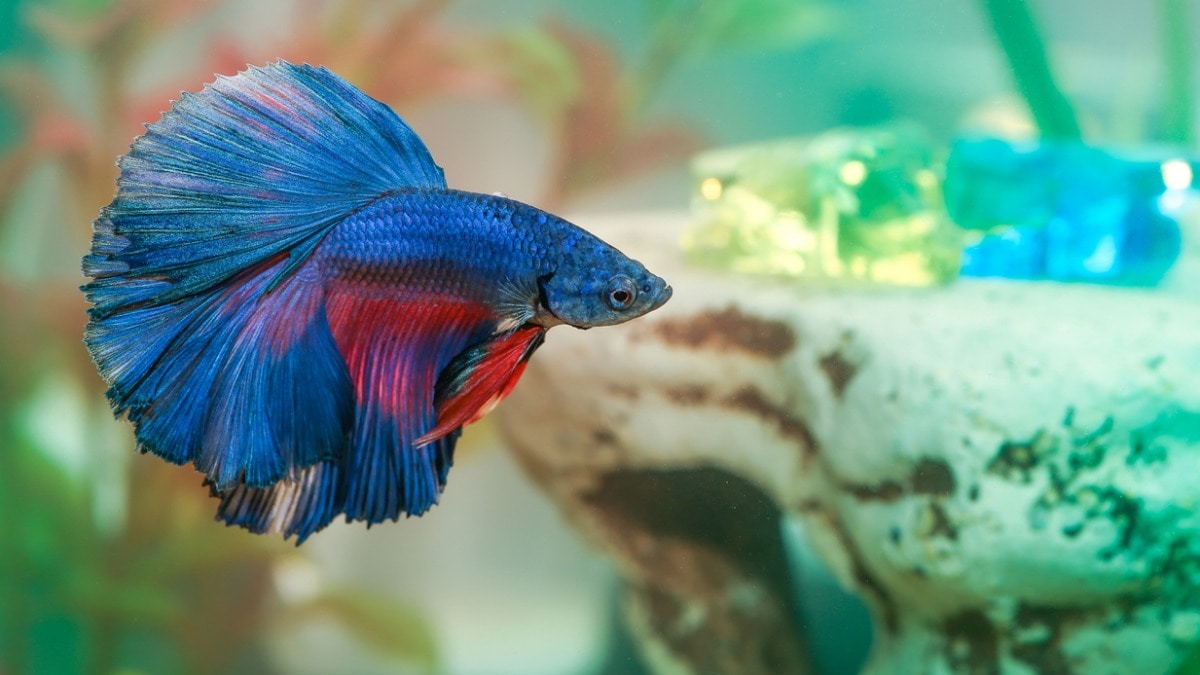
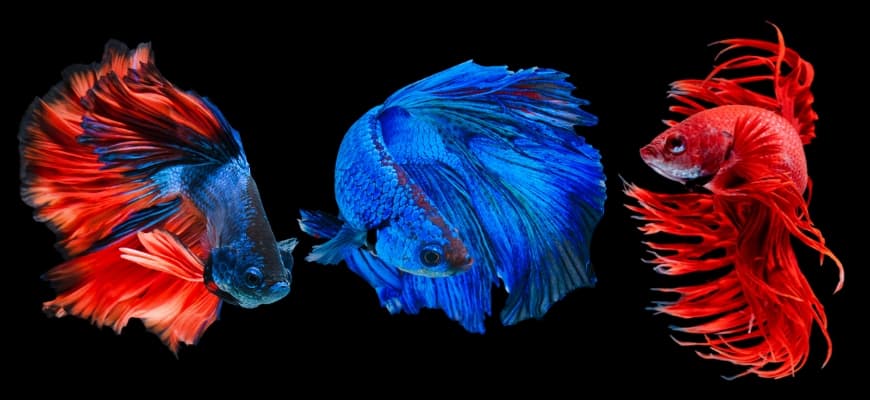
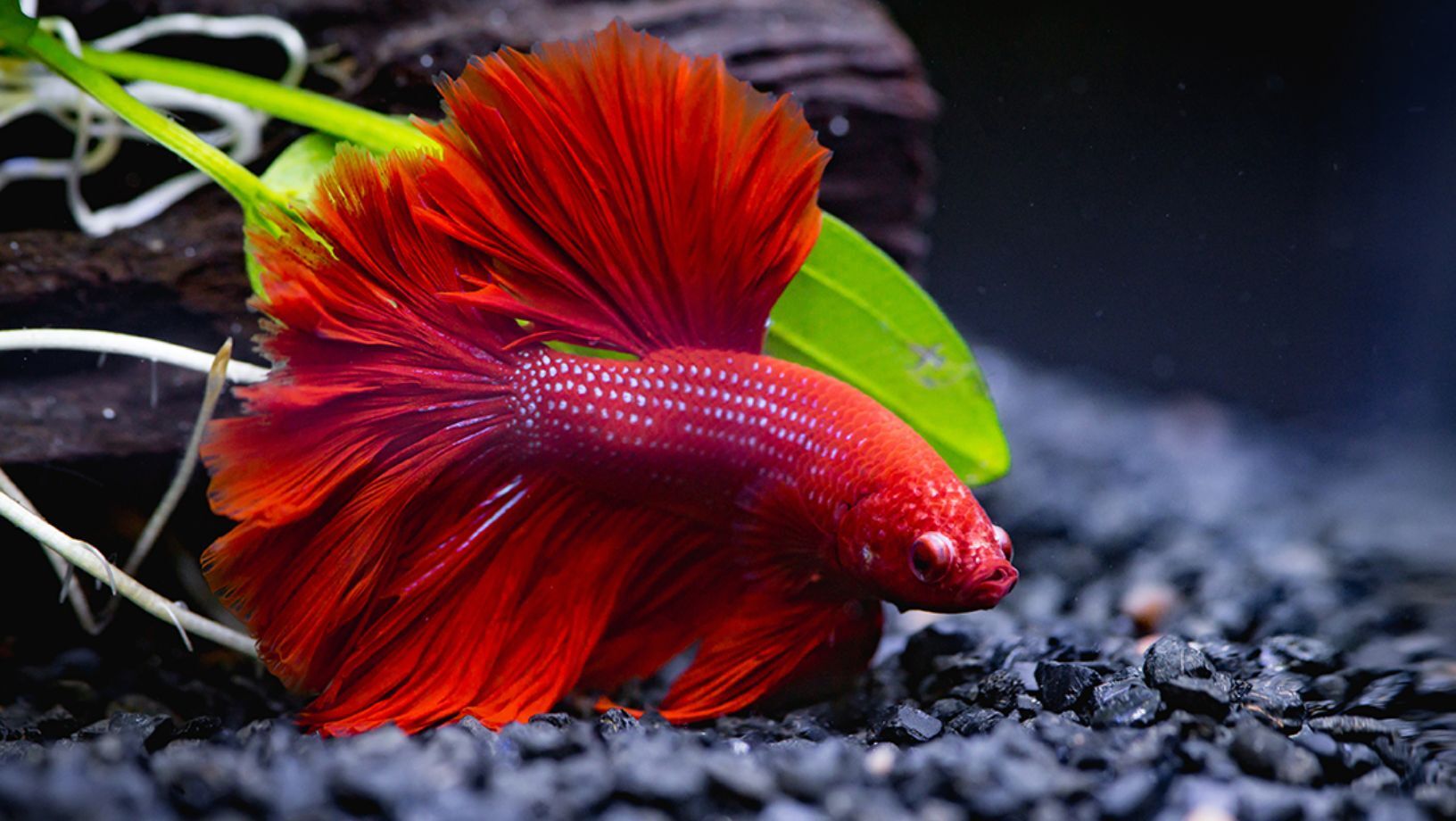
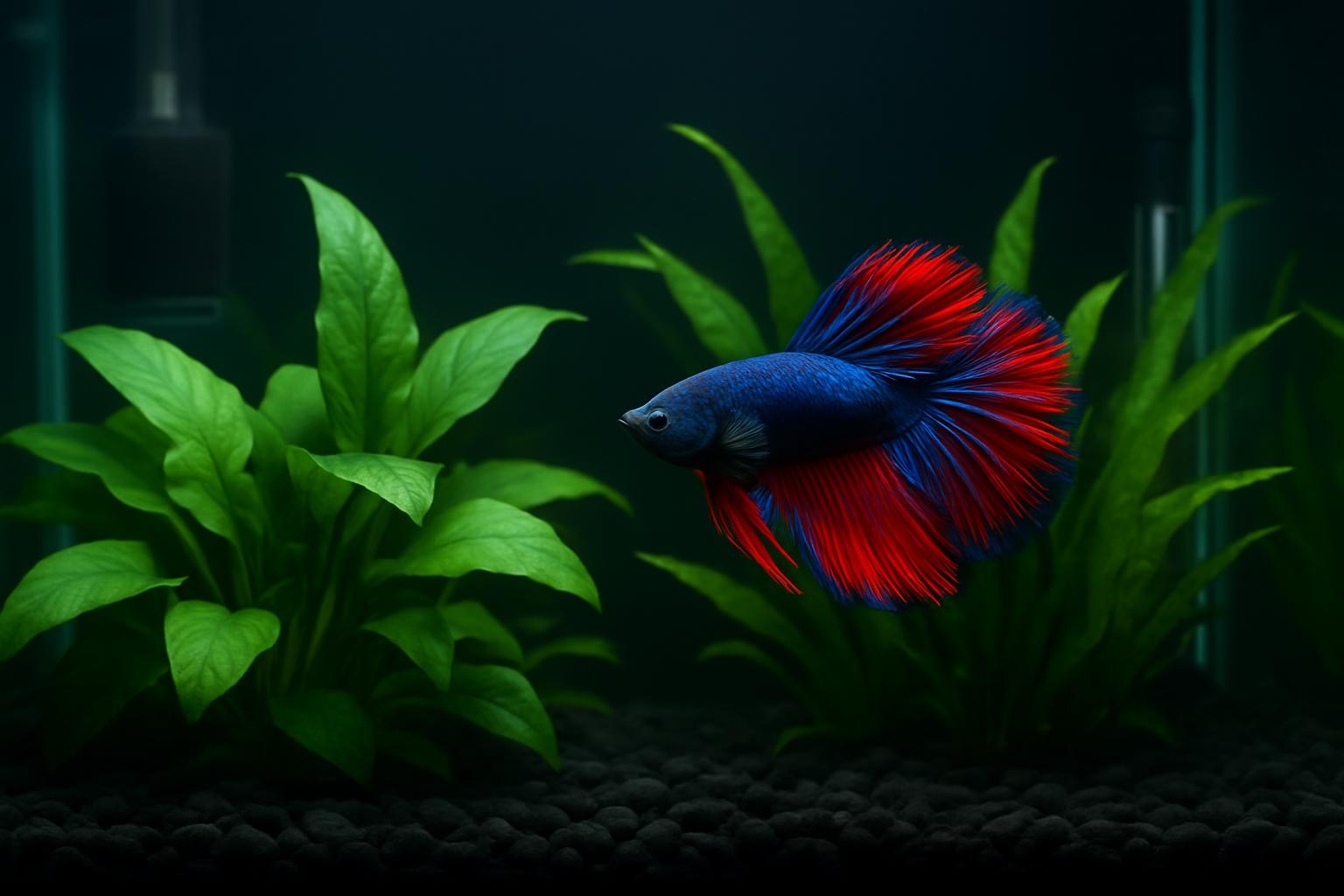
Male bettas are known for their striking colors and long fins. Females are less colorful with shorter fins. In the wild, these fish are typically less vibrant.
Captive breeding has produced bettas in a wide range of colors: white, yellow, orange, red, pink, blue, green, turquoise, brown, and black. You can find solid, multi-colored, and patterned varieties. Selective breeding has also led to diverse fin types, including veil, crown, delta, fan, half-moon, lyre, and split tails.
Betta fish have a torpedo-shaped body and an upturned mouth for surface feeding. Adults grow to two to three inches, with females slightly smaller. Uniquely, they have a labyrinth organ, enabling them to breathe atmospheric oxygen, which helps them thrive in low-oxygen environments.
Tank gauges
Males cannot be kept together unless there are separators in the tank. Multiple females can generally be kept together without problems. Several females, or one male, can be kept with other peaceful fish species, as long as they are small and are not fin-nipping types, such as tiger barbs.
Warning
Male bettas should not be kept with other fish that have similar body types and long fins, as they could mistake them for rivals and fight them.
Betta Habitat and Care
Bettas are one of the most recognized, most colorful, and often most controversial fish in the freshwater aquarium hobby. Debates rage about the appropriateness of keeping them in small bowls. To fully understand their needs, it is important to become familiar with their native habitat, where they live in large rice paddies, shallow ponds, and even in very slow-moving streams. Although many fish keepers are aware that bettas come from shallow waters, the warmerwater temperature is often overlooked.
The home countries of the betta are tropical, which means the water temperature is quite warm, often into the 80s. Maintaining proper water temperature is perhaps the biggest argument against keeping a betta in a bowl, which cannot readily be heat-controlled. Really, the best option is to house them in a betta fish tankwith an aquarium heater and water filter.
Warning
Bettas thrive on heat and will become increasingly listless when the water temperature falls below 75 degrees F.
Since it’s so important for bettas to live in warm water, you’ll want to get an aquariumwater heater. Consider the size of your tank when looking for a heater; the standard rule is the heater should have 5 Watts of power per gallon of water. You can get a floating thermometer or a digital one that attaches to the aquarium glass. Place the thermometer where you can easily read the water temperature. You’ll want to perform a partial water change at least once a week.
Even though bettas do well in water that is low in dissolved oxygen, that does not mean they require less oxygen than other fish. Bettas have a special respiratory organ (called the labyrinth organ) that allows them to breathe air directly from the surface. In fact, they inherently must do so. In experiments where the labyrinth organ was removed, the fish died from suffocation even though the water was saturated with oxygen. For this reason, bettas must have access to the water surface to breathe air directly from the atmosphere.
Optimally, the water for keeping bettas healthy should be soft and warm, with a neutral to slightly acidic pH. Water movement should be kept to a minimum, which means that power filters and powerheads are not suitable. Bettas may be kept in a community tank as long as the water conditions are met, and if no aggressive or fin-nipping fish are present. However, only one male may be kept in each aquarium, unless they are separated by a barrier. The use of plastic boxes that hang inside the aquarium is a suitable option for keeping more than one betta in a tank, or for keeping them in a tank with fish that might nip their fins. Females will generally not fight with each other and may be kept together in the same open space. Female bettas can also be kept with other non-aggressive fish species.
Diet and Feeding
Betta fish should be fed two to three times a day, as much food as they will eat in five minutes. In nature, bettas subsist almost exclusively on insects and insect larvae. They are built with an upturned mouth that is well suited to snatching any hapless insect that might fall into the water. Internally their digestive system is geared for meat, having a much shorter alimentary track than vegetarian fish. For this reason, live foods are the ideal diet for the betta, however, they will adapt to eating flake foods and frozen or freeze-dried foods, such as:
Brine shrimp
Daphnia
Plankton
Tubifex
Glassworms
Beef heart
These are all excellent options that may be found frozen or freeze-dried. If flake food is fed, it should be supplemented a few times a week with frozen and freeze-dried foods, and if possible, live foods.
Males typically are more brilliantly colored and have longer and flowing fins. They also have a more distinct “beard” (under the gill coverings) and are larger overall than the females. Females have short fins and will display vertical stripes and an egg spot when ready to mate.
Betta Fish Breeding
Bettas have a fairly short lifespan and are most successful as breeders when they are abouta year old; bettas in pet shops that are full sizeare usually at least six months old. They breed in bubble nests and do not require a large tank or special equipment—just a few nice-to-haves, including:
When they are ready to spawn, the pair will display intense coloration and begin circling each other under the bubble nest. The male will wrap himself around the female who has turned on her back. As she expels the eggs, they are fertilized and begin to sink. The male will scoop up the eggs in his mouth and spit them into the nest. This may be repeated several times, but finally, the male will chase the female away and she should be carefully removed from the breeding tank. From this point on, the male will tend the brood and care for the babies after the eggs hatch.
The male will continue to tend the bubble nest, spitting eggs that fall out back into the nest. In one to three days the eggs will hatch, and the fry will be visible hanging in the bubble nest with their tails pointing downward. They are provided nutrition by their yolk sack for another 36 hours, during which time the male will continue to pick up and return any fry that falls out of the nest. The male should be removed when the fry leave the bubble nest, as the male may eat the young once they are free-swimming.
More Pet Fish Species and Further Research
If bettas appeal to you, and you are interested in some compatible fish for your aquarium, read up on:
Check out additional fish breed profiles for more information on other freshwater fish.
FAQ
How long do betta fish live?
Betta fish generally live anywhere from two to five years.
Can you put two betta fish together?
If you have a male betta fish, only one should be kept in the tank. However, if your fish are female, you can keep many together at once in the tank.
Are betta fish easy to keep alive?
Betta fish are low-maintenance fish. Note, however, that they do need regular water changes and for their tank to be kept at a certain temperature.
Can betta fish live in tap water?
Betta fish can live in tap water so long as it’s properly treated and warm enough. You should get a water conditioner and water heater for your aquarium to make bettas feel at-home.
Do bettas recognize their owners?
Yes, betta fish recognize their owners and even take interest in them.

:strip_icc()/siamese-fighting-fish-bettas-1378308-hero-f459084da1414308accde7e21001906c.jpg "Betta Fish (Siamese Fighting Fish) Fish Species Profile")