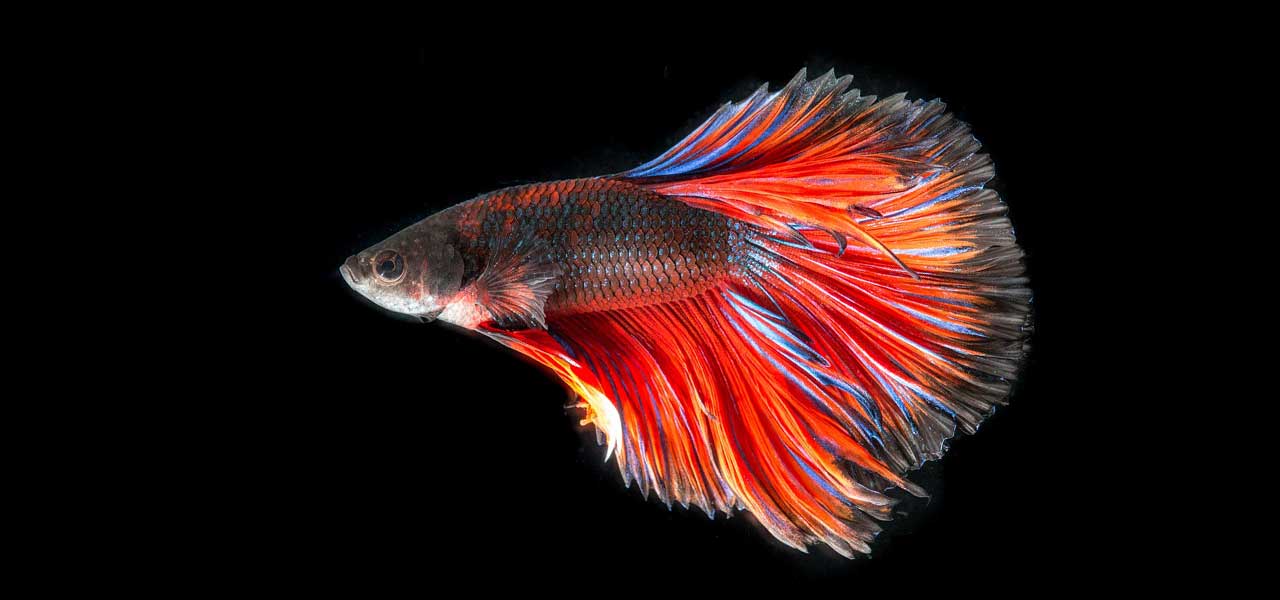
Setting up a healthy home for a betta fish requires more than a bowl and some food flakes. At minimum, you need a 5-gallon tank, a heater, a gentle filter, a light, substrate, hiding spots, water conditioner, and quality betta pellets. Each of these serves a specific purpose in keeping your fish active, colorful, and healthy for its full 3- to 5-year lifespan.
A 5-Gallon Tank Is the Starting Point
The most widely recommended minimum tank size for a single betta is 5 US gallons (about 19 liters). If you’re new to fishkeeping, an 8-gallon tank gives you more room for error because larger volumes of water stay chemically stable longer. Small fluctuations in temperature or waste concentration that would be dangerous in a tiny container barely register in a bigger tank.
Avoid the mini “betta bowls” sold at pet stores. They’re too small to hold a heater or filter, and the water quality crashes fast. A standard rectangular aquarium works best because it provides more horizontal swimming space than a tall, narrow design. Bettas spend most of their time in the upper half of the water column, so surface area matters more than depth.
Heater and Thermometer
Bettas are tropical fish that need water between 75 and 80°F (24 to 27°C). Water that’s too cold suppresses their immune system and leaves them vulnerable to disease. Water that’s too warm speeds up their metabolism, shortens their lifespan, and makes them visibly uncomfortable. Unless your room stays in that narrow range year-round, you need a small adjustable aquarium heater.
For a 5-gallon tank, a 25-watt or 50-watt adjustable heater is typical. Pair it with a simple stick-on or digital thermometer so you can check the temperature at a glance. Preset heaters exist but give you no control if they run too warm, so adjustable models are worth the slight extra cost.
A Gentle Filter
Filtration keeps water safe by housing the beneficial bacteria that break down fish waste (more on that below). But bettas, especially the long-finned varieties, are weak swimmers. A strong current stresses them out and can push them around the tank. You want a filter with a low, adjustable flow rate.
Sponge filters are the most popular choice for betta tanks. They’re inexpensive, quiet, run on a small air pump, and produce a very gentle current. Small hang-on-back filters also work if you baffle the outflow with a sponge or pre-filter to soften the current. The goal is enough water movement to circulate and oxygenate without creating a river your betta has to fight.
Understanding the Nitrogen Cycle
This is the single most important concept in fishkeeping, and skipping it is the number one reason new bettas get sick. Here’s what happens inside your tank: your fish produces waste, which breaks down into ammonia. Ammonia is highly toxic and can burn a fish’s gills and skin. Over time, a colony of beneficial bacteria grows in your filter and converts ammonia into nitrite, which is still harmful. A second type of bacteria then converts nitrite into nitrate, which is much less dangerous.
This process is called “cycling” your tank. A fully cycled aquarium reads 0 parts per million (ppm) ammonia, 0 ppm nitrite, and some level of nitrate. When nitrates climb to 40 ppm or higher, a water change brings them back down. You can test these levels with a liquid test kit (often sold as a master test kit at pet stores), and it’s one of the most useful purchases you’ll make. Cycling a new tank before adding a fish typically takes 2 to 6 weeks. You can speed it up by adding bottled beneficial bacteria or filter media from an established tank.
Substrate: Sand or Gravel
Substrate covers the bottom of your tank and anchors live plants if you choose to add them. Both sand and gravel work fine for bettas. Sand gives a smooth, natural look and doesn’t trap debris as easily, but it can compact over time and create pockets of stagnant water if you don’t stir it occasionally. Gravel is stable, widely available, and works well with root-feeding plants if you add fertilizer tabs. Either way, rinse your substrate thoroughly before adding it to the tank to remove dust and fine particles.
Hiding Spots and Decorations
Bettas are territorial fish that feel more secure when they have places to retreat. Caves, driftwood, and plant cover all serve this purpose. When choosing decorations, check for sharp edges by running a piece of pantyhose over them. If the fabric snags, the decoration can tear a betta’s delicate fins. Make sure any holes or tunnels are large enough for your fish to swim through without getting stuck.
A floating betta log is a particularly good option. It sits at the surface where bettas naturally hang out, gives them a place to rest and nap, and some fish even build bubble nests inside. Many logs also have a small side opening you can drop food through.
Live Plants Make a Real Difference
Live plants aren’t strictly required, but they improve water quality by absorbing nitrates, provide natural hiding spots, and make the tank look far more interesting to both you and the fish. Several beginner species thrive in low light with no special equipment:
- Java remote: long, thick leaves that attach to driftwood or rocks rather than being planted in substrate
- Anubias: comes in many shapes and sizes, also attaches to hardscape, and grows slowly enough that it rarely needs trimming
- Marimo moss balls: the easiest option of all, you literally drop them into the tank wherever you want
- Cryptocoryne: a group of plants that tolerate low to high light and root well in gravel or sand
- Water sprite: versatile enough to plant in substrate or let float at the surface, where it provides shade bettas enjoy
A basic liquid fertilizer once a week is enough for most of these plants. No CO2 injection or high-tech lighting needed.
Lighting and a Day-Night Schedule
Bettas need a consistent cycle of light and darkness, just like any animal with a circadian rhythm. Around 8 to 12 hours of light per day is the standard recommendation, with the rest spent in darkness or dim ambient light. A simple LED aquarium light on a timer handles this automatically and eliminates the guesswork. Consistent lighting also helps if you keep live plants, which need light to photosynthesize.
Leaving the light on 24 hours stresses bettas and disrupts their sleep. They do sleep, often wedged in a plant leaf or resting on the bottom, and they need darkness to do it properly.
Food and Feeding
Bettas are omnivores that lean heavily toward protein. Look for a high-quality betta pellet with a crude protein content around 35%, which research has shown produces the best growth and reproductive health. A fat content near 5% is appropriate since bettas aren’t the most active swimmers. Feed a small amount once or twice a day, only as much as your fish can eat in about two minutes.
Beyond pellets, bettas benefit from variety. Frozen bloodworms, freeze-dried daphnia, and brine shrimp all make good treats a few times a week. Live foods like blackworms or baby brine shrimp are even better because they activate your betta’s natural hunting instincts. If you use frozen food, a worm feeder cone lets your betta work to extract the food, which doubles as mental stimulation.
Enrichment to Prevent Boredom
Bettas are more intelligent and curious than most people expect. A bare tank with nothing to explore leads to a lethargic, dull-colored fish. Beyond plants and hiding spots, a few extras keep them engaged. A floating exercise mirror, used for just a few minutes a day, triggers a betta’s territorial display: flared gills, stretched fins, and active patrolling. It’s a genuine workout. Remove the mirror after a few minutes so it stays stimulating rather than stressful.
Rearranging decorations every few weeks gives your betta a “new” environment to explore. Offering live foods forces them to chase and hunt. Even something as simple as placing a small object outside the tank for them to investigate can hold their attention. These fish notice changes in their surroundings and respond to them.
Water Changes and Ongoing Maintenance
Once your tank is cycled and stable, a 25 to 30% water change each week keeps nitrates in check and the water fresh. If your tank is heavily planted, you may be able to stretch this to every two weeks, but weekly is the safest routine for beginners. Use a simple siphon or gravel vacuum to remove water from the bottom where waste settles, then replace it with dechlorinated water at the same temperature as the tank.
For a new tank that hasn’t fully cycled yet, you’ll need to be more aggressive. Test your water daily with a liquid test kit, and do a 50% water change any time ammonia or nitrite registers above zero. This protects your fish during the vulnerable cycling period. A bottle of water conditioner that neutralizes chlorine and chloramine is essential for every water change, since tap water contains chemicals that are toxic to fish.
The Complete Shopping List
Here’s everything in one place so you can shop confidently:
- Tank: 5 gallons minimum, 8 to 10 gallons if budget allows
- Adjustable heater: 25 to 50 watts for a 5-gallon tank
- Thermometer: stick-on or digital
- Sponge filter and air pump (or a baffled hang-on-back filter)
- Substrate: sand or smooth gravel
- Water conditioner: removes chlorine and chloramine from tap water
- Liquid test kit: measures ammonia, nitrite, nitrate, and pH
- LED light with timer
- Lid or hood: bettas are jumpers
- Hiding spots: caves, driftwood, floating log
- Live or silk plants: avoid hard plastic plants that can tear fins
- Betta pellets: 35% protein or higher
- Frozen or freeze-dried treats: bloodworms, brine shrimp, daphnia
- Small net and siphon/gravel vacuum
Set everything up and let the tank cycle for a few weeks before bringing your betta home. It takes patience, but starting with a properly cycled tank is the single best thing you can do for your fish’s long-term health.





:strip_icc()/siamese-fighting-fish-bettas-1378308-hero-f459084da1414308accde7e21001906c.jpg "Betta Fish (Siamese Fighting Fish) Fish Species Profile")