Our work today
Our right whale research program, established in 1980, is one of the longest-running and most comprehensive whale research and conservation initiatives in the world.
Here are a few ways the New England Aquarium and our Anderson Cabot Center for Ocean Life are working to protect this critically endangered species:
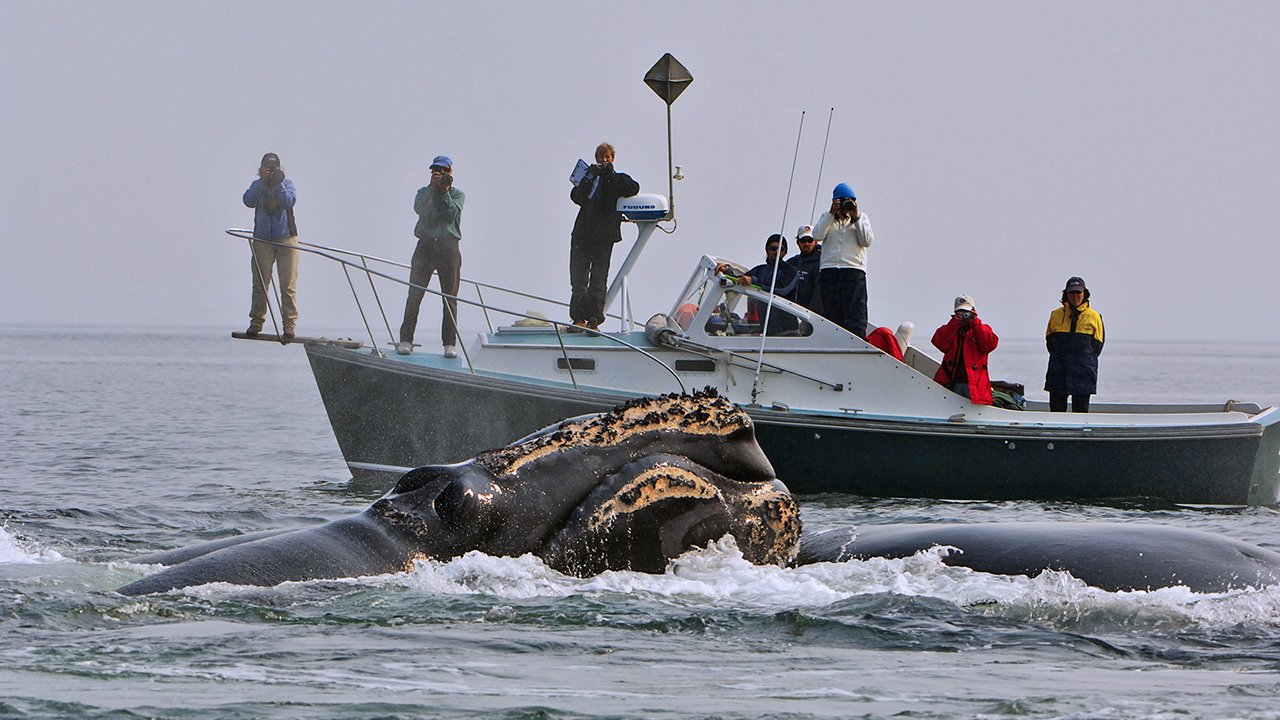
Boat surveys
Our right whale scientists conduct field research, monitoring habitats such as Cape Cod Bay and the Gulf of St. Lawrence for right whales.
Aerial surveys
Our Aerial Survey team documents animal populations, like the North Atlantic right whale, recording how they travel through and use the ocean and the impacts of wind farms on those movements.
Hormone analysis
Anderson Cabot Center scientists have developed a way to detect pregnancy and stress in North Atlantic right whales through the analysis of biopsy and fecal samples collected during field season while out on boat surveys, and from baleen samples collected from deceased whales.
North Atlantic Right Whale Catalog
The North Atlantic Right Whale Catalog is a directory of more than a million photographs and physical details of more than 830 living and dead right whales dating back to 1935. Reproduction, entanglement rates, health, and population numbers are tracked using the Catalog.
Tracking anthropogenic injuries
Aquarium scientists have developed innovative ways to noninvasively assess health and the frequency and impacts from human activities.