Bringing a dog into your life is a decision that requires careful consideration, whether you’re an experienced or novice dog owner. With so many different breeds of varying temperaments and size, the sheer amount of options can be overwhelming. If you’re an experienced dog owner looking for a large, athletic, and faithful companion, consider the Rhodesian Ridgeback.
The Rhodesian Ridgeback’s Temperament
These members of the Hound Group are considered “all purpose Renaissance hounds.” This means they’re versatile when it comes to different types of working. The breed rose to fame Africa for their tracking skills and baying, and hunting — but not killing — lions.
Today’s Ridgebacks are wonderful family dogs due to their affectionate nature. Even so, they still retain their independence and strong prey drive. They can also be strong-willed. Firm but fair guidance is the best way to raise a Ridgeback from puppyhood. Ridgebacks are highly loyal, and protective of their loved ones.
Physical Traits and Grooming Needs
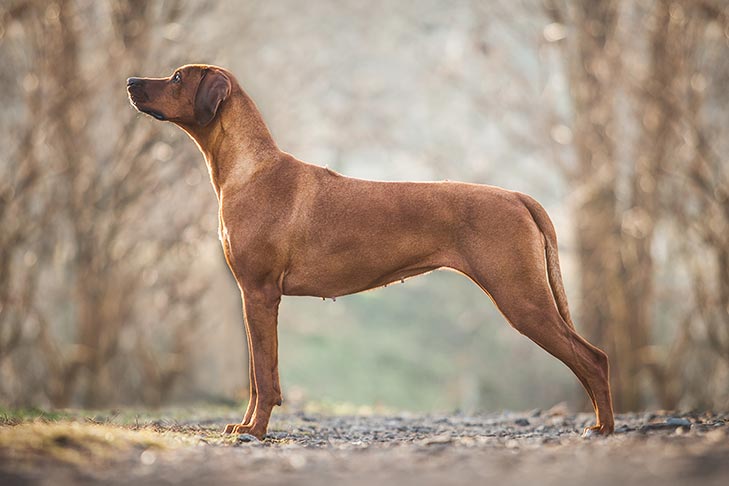
The breed’s hallmark trait, as their name suggests, is the “ridge,” or stripe of backward-growing hair, on their back. Ridgebacks are large, powerful dogs who can way between 70 and 85 pounds, if not more. The breed standard states that their coats come in one color: wheaten. The shades of wheaten vary from pale to a burnished red. Their noses are often black, but can less commonly be brown.
The Rhodesian Ridgeback doesn’t require any specific kind of grooming. Weekly brushings are fine to remove loose hair and keeping their coats nice and glossy. Occasional baths will keep them looking their best. Nails should be trimmed often if they’re not worn down naturally. It’s important to note that a lot of Ridgebacks are resistant to nail clipping, and a nail grinder may be the better option for keeping them comfortable.
How Much Training do Rhodesian Ridgebacks Need?
Rhodesian Ridgebacks are a somewhat challenging breed when it comes to both training and ownership, and are not ideal for first-time owners. They can be strong willed and prone to independent streaks, and must be trained with a firm but patient hand from early puppyhood.
Positive reinforcement in training sessions are very beneficial to Ridgebacks. Early socialization and puppy training classes are also recommended and help to ensure that the dog grows into a well-behaved companion. Because of their high prey drive, Rhodesian Ridgebacks it’s essential that they are always in a safely enclosed area when off leash.
Are Rhodesian Ridgebacks Good for Families?
Rhodesian Ridgebacks can be a good family dog for specific households. Ridgebacks are extremely devoted dogs, and are affectionate with their loved ones. They’re a vigilant breed, and make great watchdogs. Ridgebacks can be good with children with proper socialization, but they should always be supervised around them. They’re strong and athletic, requiring a moderate amount of exercise.
Ridgebacks do best in active households with experienced dog owners with plenty of time and attention to offer. Physical activity is essential to keeping a Ridgeback happy and healthy. Ridgebacks can also be successful in dog sports like tracking and agility.
How Social Are Rhodesian Ridgebacks?
Ridgebacks are independent by nature, and they can be aloof or weary towards strangers. They are absolutely people dogs around their loved ones, but they can be uneasy with new faces and environments.
Early socialization and puppy training can help curb these less desirable traits. They tend to get along well with other dogs.