
[ad_1]
What is a cat?
Here are nine characteristics common to all companion cats, together with some examples of the impact they may have on your relationship with your cat.
Hunter
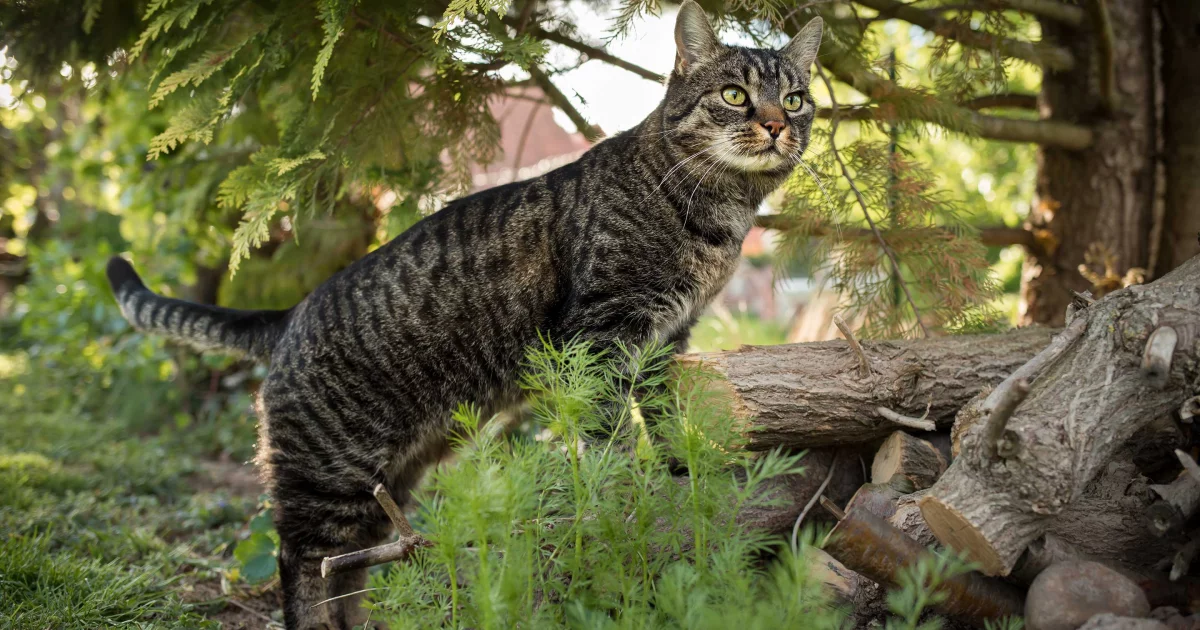
Cats have evolved physically and behaviourally to be specialist solitary hunters, motivated and driven by the sight and sound of prey. To be a successful hunter, your cat’s natural rhythms will fit the time when their main prey of small creatures are active and vulnerable – usually at dawn and dusk.

Cats need the space and opportunity to engage in natural hunting behaviours
What does this mean for you, the owner?
-
They are likely to bring prey indoors, as this is considered by the cat as their core territory, where they feel safe to eat, sleep, play and potentially engage in social interactions (dependent on the individual cat)
-
Cats prefer to eat alone, a trait inherited from their wild ancestors. While they will eat in the presence of other cats, they may do so with an increased sense of competition and potential conflict, especially in multi-cat households. To accommodate this natural preference, it’s recommended to provide multiple feeding stations, ideally in separate locations or with visual barriers, to minimise stress and potential conflict during feeding times
Read our article on understanding the hunting behaviour of cats for more information, along with advice on welfare-friendly ways to reduce your cat’s hunting behaviour.
Obligate Carnivore
Cats are such successful hunters that they’ve never needed to revert to vegetable matter to bolster their diet, thereby evolving as obligate carnivores. This means they are unable to survive or thrive without the nutritional components found in meat.
As carnivores, cats don’t usually volunteer to eat fruits and vegetables, but some cats can be seen to eat and enjoy grass. Eating grass is a normal behaviour in cats, but we don’t fully understand why. The general theory is that grass can help move food or hairballs through the digestive tract (either up or down) and potentially provide cats with essential trace elements in their diet.
What does this mean for you, the owner?
-
Cats lack the metabolic pathways which process certain drugs. This means that many compounds suitable for people or dogs may be toxic to cats. Plants not toxic to other animals may also be toxic to cats, such as members of the lily family.

Cats cannot be vegetarians; they need the nutritional components found in meat
Territorial
Territory is the space that cats would normally defend from other cats. It includes all the resources your cat needs to survive, thrive and carry out their normal behaviours.
What does this mean for you, the owner?
-
If a cat’s territory is restricted, for example, when they are confined indoors, you need to ensure that their environment is interesting and stimulating
-
Cats rarely voluntarily leave their territory, so when it’s necessary, you must be sensitive to their needs – for example, choosing a good cattery and a cat friendly veterinary clinic that understands your cat’s unique needs
Agile
A cat’s unique combination of balance, coordination, flexibility and strength enables them to explore and utilise their three-dimensional environment, hunt silently, and escape danger. It also allows cats to maintain their coats in perfect condition, with the flexibility to groom themselves frequently and efficiently. Cats are physiologically adapted for short, frequent bursts of activity rather than prolonged periods.
What does this mean for you, the owner?
-
Cats will use all dimensions in the house, so ensuring the home is cat friendly and providing opportunities for the cat to climb is equally important as considering their floor space

Provide cats with the opportunity to climb
Sensory sensitive
Cats are highly sensitive to scent, chemicals, sounds and vibrations that we’re unable to detect. Cats deposit odours and chemical messages called pheromones from glands over their face and body, and in their faeces and urine, to communicate and define their territory. They are therefore specialised in detecting the odours and pheromones of other cats.
What does this mean for you, the owner?
-
Changes to the familiar and reassuring scent profile of your cat’s home can be challenging, for example, household cleaners and deodorisers, new furniture, visiting people or dogs, other cats coming in through the cat flap and decorating
-
Cats will leave chemical messages (pheromones) for self-assurance. When they are relaxed, they mark with face glands, and if they feel insecure in their homes, may resort to using stronger signals such as urine spraying
Self-reliant
Cats don’t need other cats around. They can hunt for themself, find their own den, and defend their own territory. They can keep themselves clean, their claws sharp, and protect themselves by being highly aware of their surroundings and using their agility, speed and strength to get themselves out of trouble.
Cats have no biological requirement for companionship like dogs (and humans) – they are happy on their own. Unlike dogs, cats also do not form structured packs and there is no dominance hierarchy among a group of cats.

Not all cats want a friend; they are not born with the biological need for companionship like dogs are
What does this mean for you, the owner?
-
Cats are excellent at hiding signs of illness or pain – they tend to stay still and quiet, so as not to attract attention. This is one of the reasons why pain and illness are difficult to establish and monitor in cats
Highly aware
Being lone hunters, cats need a highly specialised system that allows them to react quickly and successfully to food opportunities and avoid danger. Being a small creature, without a pack or group to help protect or alert them to danger, leads them to be highly reactive. Cats also need to be aware of signs (usually chemical messages) left by their own kind. While cats may sleep for two-thirds of the day, when they are awake, they’re highly aware of their environment.
What does this mean for you, the owner?
-
Cats can be stressed by sights, sounds and smells in our everyday life, especially if new or sudden, and often things we are unaware of
Emotional and cognitive
Cats may not be considered as emotional, because they don’t have the facial dexterity that species such as humans, apes or dogs have to convey how they are feeling. However, like other mammals, cats feel fear, pleasure and frustration – emotions that help them survive. They learn about the quality of their environment and how to behave and integrate what they learn into tactics for survival. A cat’s natural response to a threat is to run away and hide – they avoid negative situations and engage with positive things such as food, warmth and pleasant social interaction.
What does this mean for you, the owner?
Adaptable
Cats can survive and thrive in a variety of environmental and social circumstances. They can live in groups (usually related or where they choose their own companions), where food and shelter are abundant. They have adapted to cope with the high densities of cats we have in our homes and gardens. Some can adapt to a lifestyle not necessarily active at dawn and dusk, but to the activity patterns and availability of food when owners are home, and to a wide range of ‘companions’ from people to dogs and other animals.
What does this mean for you, the owner?
Cats fit into a wide range of lifestyles with us and often cope very well. Sometimes, however, they can be pushed too far, fail to cope any longer, and problems may occur. When cats are stressed, they may show a range of behaviours, such as urine spraying or soiling indoors, or chronic anxiety. If you’re worried about your cat’s behaviour, speak to your veterinary team in the first instance to rule out a medical problem, and be guided by them on the next steps, which may involve referral to a clinical animal behaviourist..
[ad_2]
Source link




![11 Best Cat Cafes In Singapore [2026]](https://singaporeverified.com/wp-content/uploads/2026/03/Cat-Cafes-in-Singapore-Feature-Image.webp "11 Best Cat Cafes In Singapore [2026]")