You’ve decided you want a canine companion, but aren’t sure where to begin. Whether you’re an experienced or first-time dog owner, researching breeds and the intricacies of dog ownership is crucial.
If you’re an experienced dog owner and feel that you’d be well suited for an independent, but adaptable companion, consider the Scottish Terrier.
The Scottish Terrier’s Temperament
Members and true representatives of the Terrier Group, Scotties are fiercely independent and full of energy. Despite their stubborn streaks, Scottish Terriers have earned the nickname of “Diehard,” and often form strong bonds with one member of their family.
Scotties can be aloof towards strangers, making them strong candidates for watchdog duty. They also may be aggressive towards other dogs if they aren’t properly socialized. The breed requires a variety of outlets to keep them active and happy. Brisk walks or games of fetch or tug-of-war are great ways to keep a Scottie active.
Physical Traits and Grooming Needs
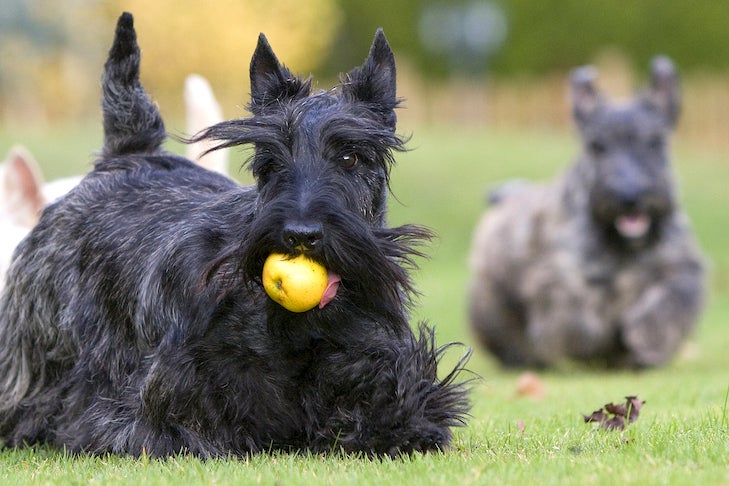
Scottish Terriers’ compact bodies are full of personality and boisterous energy. The short-legged Scottie stands at about 10 inches tall, and weighs between 18 and 22 pounds. Their wiry topcoat and soft, dense undercoat coat comes in black, wheaten yellow, or a brindle pattern. Scotties have bright eyes and erect ears and tail — showcasing the breed’s innate alertness.
Regular grooming is essential for Scottish Terriers. Their double coat consists of a harsh, wiry layer and dense undercoat. Hand stripping is the ideal way to groom a Scottie, and they should be introduced to this process early in puppyhood. If you aren’t comfortable caring for the Scottie’s somewhat high-maintenance coat, hiring a groomer will be your best bet.
Weekly brushing and combing in addition to professional grooming sessions will help keep the Scottie’s coat free of tangles and their skin healthy.
How Much Training Do Scottish Terriers Need?
The Scottie’s proclivity for independence and stubbornness makes them a somewhat difficult dog to train. The challenges that come with training a Scottish Terrier make them a less-than-ideal choice for first-time dog owners. Short training sessions are best for Scotties- —think 15 minutes or less. choice for first-time dog owners. Short training sessions are best for Scotties: think 15 minutes or less.
Creative, varied methods are best for the breed. If they get bored, they won’t will not respond to training exercises. Be persistent and speak with a positive tone. Scotties also respond well to rewards. Like with all breeds, early socialization and puppy training courses are key to helping your Scottie grow into a well-mannered adult.
Are Scottish Terriers Good for Families?
Being a small breed with a big personality, Scottish Terriers would do best in a home with older, responsible children. They’re also happiest as the sole dog of the household. If you’re an experienced dog owner and are seeking a small but effective watchdog, a Scottish Terrier might be your perfect match.
Ultimately, Scotties love their people and tend to form particularly strong bonds with one specific person.
How Social Are Scottish Terriers?
Scotties are big lovers with their families, but they tend to be aloof towards strangers and other dogs. It’s important to note that Scotties have a high prey drive and may be inclined to chase small animals. Early, frequent socialization will help curb a Scottie’s tendency towards being territorial or standoffish.