[ad_1]
“Where are the big sharks?” is another common question that our educators get. Though roughly 80% of shark species are about four feet long or less, guests are usually most familiar with apex predator species like white sharks, tigers, hammerheads, and bull sharks.
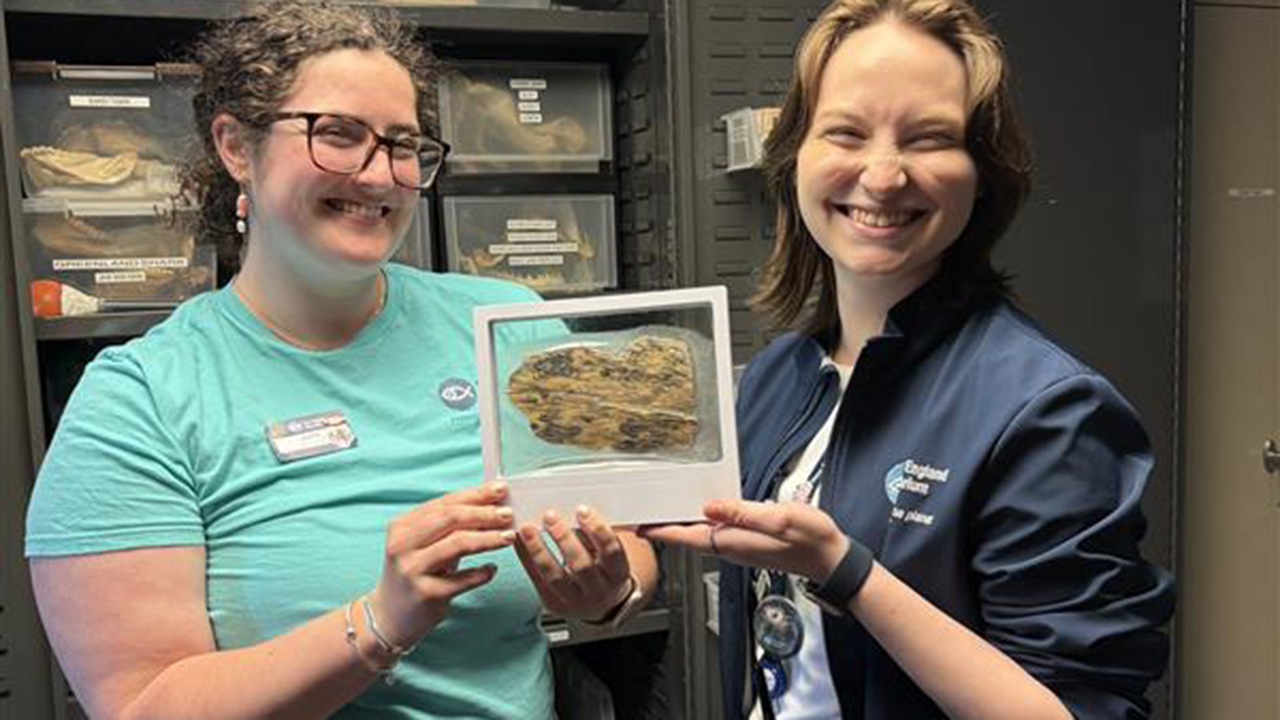
This biofact helps tell the story of those larger sharks we don’t have on exhibit. Visitors can gently touch the teeth and see the additional rows behind them, which would have been ready to rotate forward as older teeth fell out.
“They’re like a shark tooth conveyor belt,” Jenn said. “Most species of sharks go through about 10,000 teeth in their lifetimes.”
Understandably, this is one of the most photographed biofacts in the collection. Guests are welcome to pose with their head in the middle of the jaws. It’s also a favorite of our teen internswho find that the dramatic jaw makes talking with passersby easy.
Biofacts are a bridge between what guests see in our exhibits and the bigger questions behind them, the questions that can turn curiosity into ocean advocacy. They put something real in your hands, and trust you’ll take the conversation from there.
Plan your visit and keep an eye out for visitor educators in the galleries. You never know which biofact they’ll have in hand and what it might spark.
[ad_2]
Source link