
Can you talk a bit about what having a resilient, accessible, and inclusive waterfront means?
It should look like a microcosm of the City of Boston. We want every Bostonian and visitor to see themselves reflected in the environment. After all, the waterfront is a public space that belongs to all of us.
I look at resilience, accessibility, and inclusivity from a physical perspective, too. It’s critical that we engage in comprehensive planning that protects us against the effects of climate change. This work needs to be done on a neighborhood or district basis. Success can only be achieved by public-private collaboration, ensuring that laws and regulations allow for these projects, funding and financing are available, and leaders have widespread support.
What are some of the collaborations the Aquarium has been part of through the Downtown Waterfront for All campaign?
One of my favorite partnerships so far has been with the Coalition for a Resilient and Inclusive Waterfront (CRIW). CRIW has more than 60 partner organizations who work to improve our waterfront throughout Greater Boston.
In 2023, we partnered with CRIW to create an outdoor photo exhibit, “Voices of the Waterfront,” based on four areas: Boston Harbor and its islands, the Charles River Watershed, the Neponset River Watershed, and the Mystic River Watershed (read about it here). It features photos and quotes from individuals highlighting what the waterfront means to them.
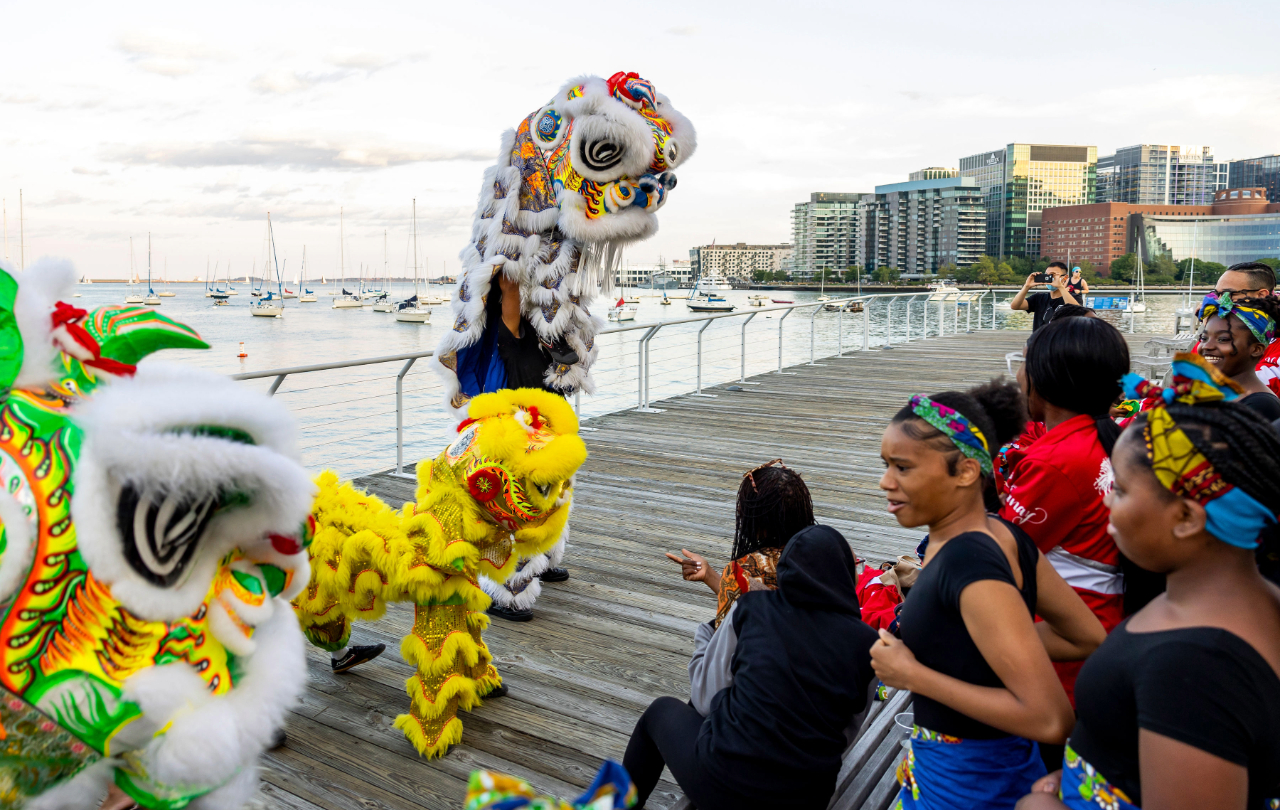
The exhibit accomplishes a few goals. First, we’ve heard repeatedly that people want to see more activations along the Harborwalk. Second, the exhibit symbolically brings more inland neighborhoods to the waterfront, showcasing how integral water is to our community. Lastly, we want the exhibit to evoke joy and inspire curiosity. Visitors get to see a few ways that people engage with the waterfront and can imagine: What other opportunities and activities have we not tapped yet?
You’ve met with community members in several Boston neighborhoods—can you talk a bit about these conversations?
Many in Boston feel there has been a long history of making planning and development decisions on individual parcels with limited public engagement.
The result is minimal community buy-in and a feeling of disconnect between residents and leaders.
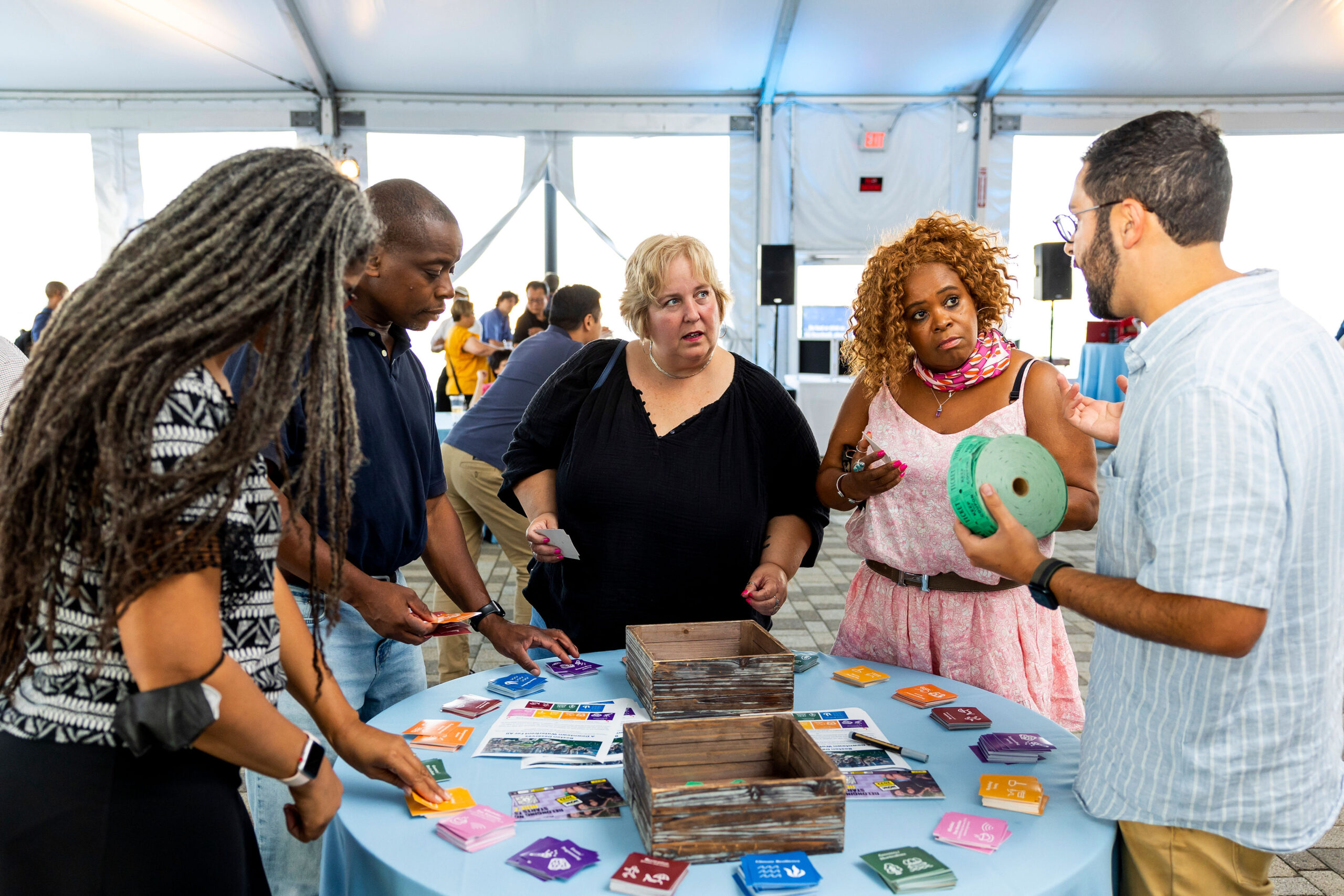
To help remedy this, in 2022 and 2023, we hosted community listening sessions supported by the Barr Foundation in Hyde Park, Mattapan, Chinatown, Dorchester, and East Boston and tabled at countless community events. Using surveys and open dialogue, we asked residents what they wanted to see more of along the waterfront.
Moving forward, this data can be used to design the Aquarium’s programmatic offerings, inform planning and development decisions, and foster increased trust with Boston residents.
What feedback are you hearing?
The same major themes emerged, regardless of the neighborhood:
- Cost and transportation are the biggest barriers
- People want to see more free programming, especially concerts and seasonal activations
- People want to see increased diversity along the waterfront
- Residents from all neighborhoods want to be invited to the planning processes
Beyond improving the built environment, how else is the Aquarium fostering a more inclusive space?
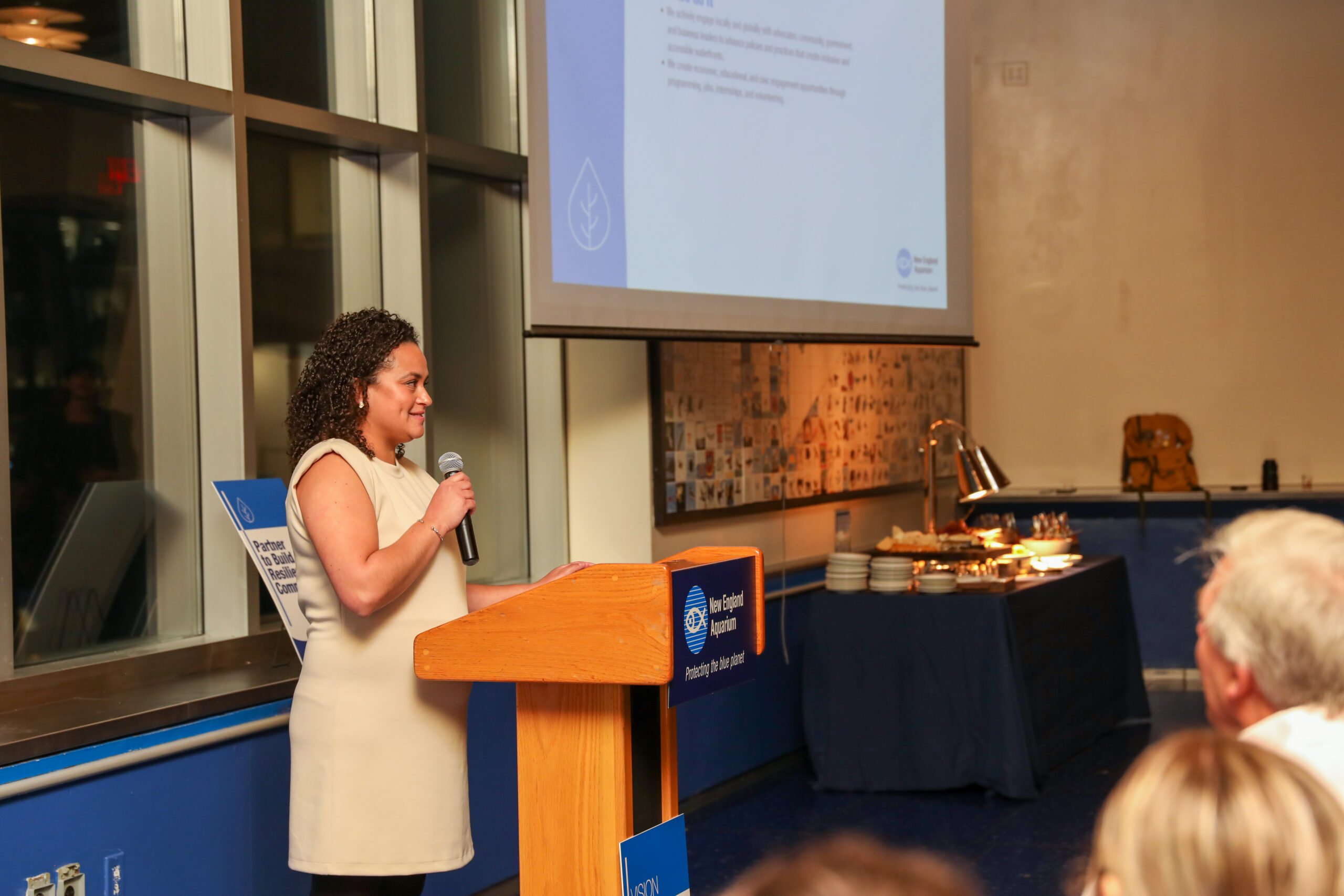
By asking: How can engagements be mutually beneficial for the Aquarium, the waterfront, and the community? We plan to continue to work together with community members to listen and learn more about their hopes and insights. We have started hosting a variety of programming to engage new audiences: a film screening with the Mattapan Teen Center, a lecture featuring Minorities in Shark Sciences, participating in the Fierce Urgency of Now festival for young professionals of color in Boston, and much more.
Most recently, the Aquarium launched the BPS Sundays program with the City of Boston. Between January and August 2024, Boston Public School students will receive free access to the Aquarium and other Boston cultural institutions on the first two Sundays of each month for themselves and up to three family members. With this initiative and others, we’re working to close the “experience gap” in Boston by creating increased access for all.
How can the wider Aquarium community support a Downtown Waterfront for All?
Find ways to get involved that work with your schedule! Reach out to your local elected officials, attend public planning meetings, and submit written comments. Creating change requires a continuous feedback loop, and we want to hear from you. Our entire staff is here to help make your experience at the Aquarium positive, and we’re committed to creating a downtown waterfront for all.
This story originally appeared in the Spring 2024 issue of blue member magazine.